
Paint & Autobody? You Can Do It!


The paint and body work on the 55 Ford Fairlane has won a few trophies!
Unforeseen Results
When it comes to the automotive world, there are two things for which I am known. The most prevalent would be the Y Block Ford V8 engine. Obviously, the blog posts and the content on my YouTube channel, @HotRodReverend, are filled with technical advice, parts support, personal experience, and prolific statements encouraging owners to keep their Y Block in the vehicle – do not swap it! The second automotive category would have to be the paint and body work on my 1955 Ford Fairlane. Over a decade ago when I set out to put the car back on the road after a long hiatus in storage, the most significant need was for a fresh coat of paint (and giving attention to body rot).
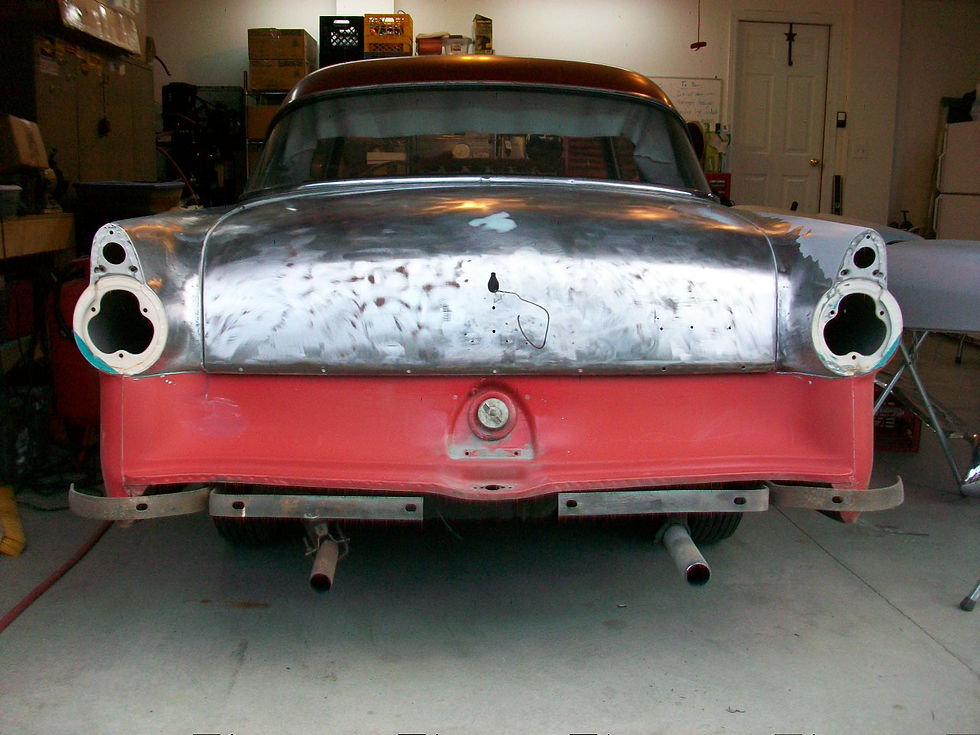
I was surprised to find that I actually enjoyed the process of prepping the car for paint.
For working on the Y Block engine and delving into the rest of the drivetrain, I always felt as though I had a good handle on that portion. However, when it came to painting the car the work and process to get all of it done seemed very intimidating. While I had sanded automotive paint surfaces as a teenager to prepare for primer to be sprayed, I had never sprayed any paint through a gun, knew nothing about urethane, sealers, clear coat, and all the rest. When I found out what the going rates for autobody work and paint were, I decided that the elbow grease would be worth the effort. There are many blog posts that cover the topic of paint and autobody (just click the category at the top of the blog list page), but after being encouraged by many subscribers and being asked quite a few questions I have decided to begin a series entitled, Paint Jobs for Newbies.
To this date, two videos have been uploaded to the YouTube channel. The first is an introductory video where I give an overview and test the waters to discover interest. The second concerns the aspect of HVLP spray paint guns.
You can tell from the view counts and the comments for both videos that the series is really a means of introducing the uninformed (like myself when I got started) to the world of DIY automotive autobody. Compared to the view counts I have in the Y Block engine world, the paint and autobody prowess is not even on the same map. If you do not believe me, experiment by visiting Google and typing "Ford Y Block" or "292 Ford" in the search engine. On the first page of results, HotRodReverend.com will be on the list and separately there will be a few of my YouTube channel videos pop up as well. Now, type "Paint and Autobody" into Google. You will probably have to navigate to page 3,679,402 of the results to finally see this website in your list!

So what's the Big Deal?
One of the reasons that I purchased the domain name and started a website was because of the size of the posts I was making on the FordBarn and JalopyJournal in the 1952-59 Ford members section. The photos, small videos, graphics, and text began to really be a lot to manage and it was taking up quite a bit of space. Most of the posts had to do with autobody work. And now, here we are, several years later, with well over 200 articles on this website. In addition, the YouTube channel has really taken off and is on pace to have over 1,000,000 views by the time 2026 ends. I never dreamed things would get this big, but here we are.
Hopefully, this effort to summarize my experiences with all the work I did to the car will be a help to those of you out there that have just purchased your first project or those of you that have had a car for a while and are considering tackling the paint and autobody work yourself.

Best Advice to Begin
Gain some knowledge. I read good books, joined the Autobody101.com forum, watched the Paintucation series from Kevin Tetz (one of the best for us in DIY in my opinion), and built a list of what I needed. Research materials (quality and price) for items such as sandpaper, tape, primer, paint, and all the rest. There is much money to spend, waste, and/or save in this whole process of getting the autobody work completed.
Invest in a good air compressor. Some people like to get an HVLP turbine system or maybe even an electrically powered spray gun. While those options may give good resuts for paint, that kind of choice can be very limiting. The air compressor is the heart of the shop and can run all kinds of tools - sandblaster, blast cabinet, DA sander, spray gun, etc, etc, etc. Choose at least a 5 hp, 60 gallon, twin stage air pump and use hi-flow fittings (more on that in the video above). Do some things that will help your air compressor and lines remain free of moisture.
Invest in a good welder. If you are restoring a vehicle then you will most probably deal with rust, rot, and other parts of the car or truck that needs to have metal replaced. The welder I purchased and continue to use over the last decade has welded everything from the front cross member to sizeable patch panels on the fenders. People in the professional world may have better options, but I use a MIG for just about everything. A mix of Argon and CO2 in a small bottle and it has worked just fine by swapping out different diameters of wire depending on the thickness of the metal I was welding. I had zero experience in welding when I started on the car - and no doubt the record here on the blog shows the progression of going from wasting wire to finally figuring out how to make things acceptable.
Consider the Place(s) to Paint. Most of my car I painted in a makeshift booth. I built one in our basement, filtered air, climate controlled, and really a good setup. I built a large booth in our two car garage for painting the entire body. Both were made of PVC and thick, drop-cloth plastic. You can paint outdoors depending on where you live.
Pace Yourself and Don't Quit. This is going to take some time. You will get frustrated, run up against problems, make some mistakes, and feel like throwing in the towel. For the most part, you are using your project car as THE teaching and training tool for all that you will learn about autobody work. That can be daunting. But I can tell you as one that has experienced it from beginning to end, it's worth it!

The air compressor is the heart of any good garage or shop; get a good one!
Hopefully in late spring and the summer months we can have more installments here on the website and on the YouTube channel that will encourage you to venture out and do your own autobody work on your project.
The Hot Rod Reverend
aka Daniel Jessup


Comments